
Testing is an important part of understanding how materials and components will perform, but not every type of testing answers the same question.
Two broad approaches are non-destructive testing (NDT) and destructive testing. The most obvious difference is in the name: NDT evaluates a component without intentionally damaging it, while destructive testing generally involves taking a specimen to failure or permanently altering it as part of the test.
Neither approach is universally “better.” They provide different types of information and are used for different purposes.
What is non-destructive testing?
Non-destructive testing uses inspection methods to evaluate materials and components while preserving their usability.
Depending on the method and application, NDT can help identify surface or internal discontinuities, evaluate material thickness, inspect welds, and provide information about the condition of a component.
Common NDT methods include:
- Ultrasonic testing (UT)
- Magnetic particle testing (MT)
- Liquid penetrant testing (PT)
- Visual testing (VT)
- Radiographic testing (RT)
IFE NDT LLC does not currently provide RT services, but radiography remains an important method within the broader NDT industry.

What is destructive testing?
Destructive testing evaluates material properties by intentionally altering, stressing, or breaking a test specimen.
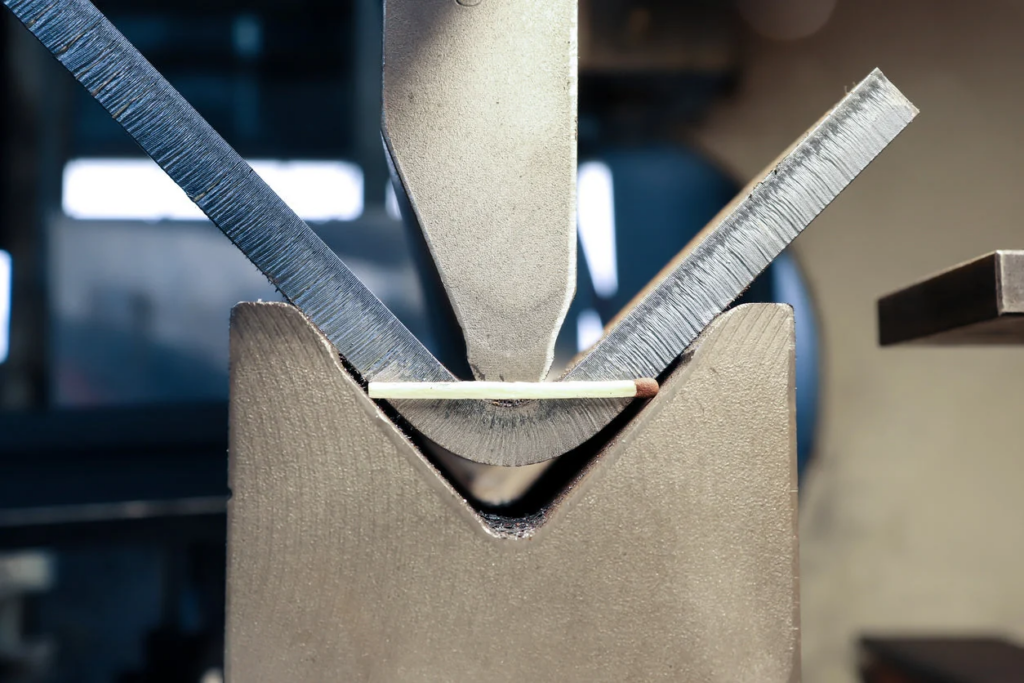
Examples can include tensile, bend, impact, and fracture testing. These tests can provide important information about characteristics such as strength, ductility, toughness, and how a material behaves under specific loads.
Because the specimen may no longer be usable afterward, destructive testing is often performed on samples, test coupons, or components specifically produced for testing rather than an in-service asset.
Why use NDT?
One of NDT’s primary advantages is the ability to gather information without intentionally sacrificing the component being evaluated.
That can make NDT particularly useful for:
- In-service equipment
- Weld inspection
- Quality control
- Preventative maintenance
- Components that would be costly or impractical to replace solely for testing
NDT can also be performed at multiple points during the life of an asset, allowing organizations to compare inspection information over time when the applicable program and procedures support doing so.
When is destructive testing useful?
Destructive testing is valuable when the objective is to understand a material’s mechanical properties or behavior under specific conditions.
For example, a manufacturer may need to verify how much force a material can withstand before failure. That question cannot always be answered through NDT alone.
This is why destructive and non-destructive testing should not necessarily be viewed as competitors. In many quality programs, they provide complementary information.

Choosing the appropriate testing approach
The appropriate method depends on what needs to be evaluated, the material involved, applicable codes and specifications, the condition of the component, and the information required.
In some situations, NDT may be the appropriate solution. In others, destructive testing may be required. Some quality programs may use both.
The important part is understanding the objective of the test before selecting the method.
At IFE NDT LLC, our role is to provide dependable non-destructive testing services that give our clients useful information without compromising the components being inspected.
Precision That Counts, Testing That Delivers.
For information about our NDT capabilities, contact info@ifendt.com.