

Non-destructive testing (NDT) relies on a range of inspection methods, each designed to detect specific types of defects under different conditions. Selecting the right method is critical for ensuring accurate results, maintaining safety, and avoiding unnecessary downtime.
If you’re new to non-destructive testing, it helps to start with a foundational understanding of how NDT works and why it matters across industrial operations.
At IFE NDT LLC, our focus is simple: Precision that Counts and Testing that Delivers. By applying the right inspection method for each situation, we help prevent failures, protect people, and provide dependable results.
In this article, we’ll break down the most common NDT methods: ultrasonic testing (UT), magnetic particle testing (MT), liquid penetrant testing (PT), radiographic testing (RT), and visual testing (VT) — and explain when and why each is used.
What are NDT methods?
NDT methods are different techniques used to inspect materials, welds, and components without causing damage. Each method is designed to detect specific types of flaws, such as internal defects, surface cracks, or material inconsistencies.
Choosing the correct method depends on several factors, including:
- Material type
- Inspection environment
- Type of defect being evaluated
- Accessibility of the component
- Required level of accuracy
Understanding how each method works helps ensure inspections are both effective and efficient.
Ultrasonic testing (UT)
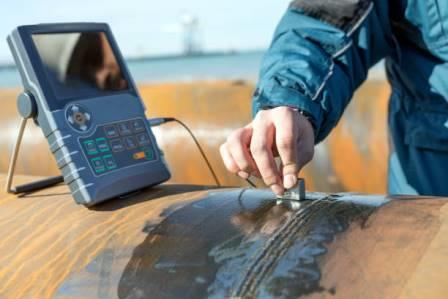
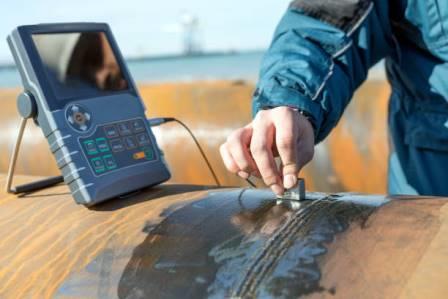
Ultrasonic testing uses high-frequency sound waves to detect internal defects within a material. Sound waves are transmitted into the component, and reflections are analyzed to identify discontinuities such as cracks or voids.
Common uses:
- Weld inspections
- Thickness measurements
- Detecting internal flaws
Advantages:
- Highly accurate for internal defects
- Provides immediate results
- Can measure material thickness
Ultrasonic testing is widely used in industries where internal integrity is critical to performance and safety.
Magnetic particle testing (MT)
Magnetic particle testing is used to detect surface and near-surface defects in ferromagnetic materials. The material is magnetized, and fine particles are applied to reveal discontinuities where the magnetic field is disrupted.
Common uses:
- Weld inspections
- Detecting surface cracks
- Evaluating ferrous materials
Advantages:
- Quick and cost-effective
- Highly effective for surface defects
- Easy to apply in the field
Magnetic particle testing is a reliable method for identifying issues that may not be visible to the naked eye.
Liquid penetrant testing (PT)
Liquid penetrant testing is used to identify surface-breaking defects. A dye is applied to the surface, allowed to penetrate flaws, and then drawn out using a developer to make defects visible.
Common uses:
- Surface crack detection
- Inspection of non-porous materials
- Weld and component inspections
Advantages:
- Simple and versatile
- Works on a wide range of materials
- Effective for detecting fine surface defects
Liquid penetrant testing is often used when inspecting materials that are not suitable for magnetic particle testing.

Radiographic testing (RT)
Radiographic testing uses X-rays or gamma rays to produce images of the internal structure of a component. This allows inspectors to identify internal defects such as voids, inclusions, or improper welds.
Common uses:
- Weld inspection
- Structural analysis
- Detecting internal defects
Advantages:
- Provides a permanent record (radiograph)
- Highly effective for internal evaluation
- Can detect hidden flaws
Radiographic testing is commonly used when detailed internal imaging is required for quality assurance. While IFE NDT LLC does not currently offer radiographic testing services, it remains an important and widely used NDT method within the industry. When appropriate, we help clients determine the best inspection approach and can coordinate with trusted providers to ensure the right solution is used.
Visual testing (VT)
Visual testing is the most basic and widely used NDT method. It involves direct observation of a component, often supported by tools such as magnification devices, cameras, or borescopes.
Common uses:
- Surface inspection
- Identifying visible damage or defects
- Routine maintenance checks
Advantages:
- Quick and cost-effective
- Requires minimal equipment
- Often used as a first step before other methods
While simple, visual testing plays a critical role in identifying obvious issues early in the inspection process.
Choosing the right NDT method
Each NDT method has its strengths, and in many cases, multiple methods are used together to provide a complete evaluation. Selecting the appropriate technique depends on the specific inspection goals and conditions.
At IFE NDT LLC, our approach is centered around a simple principle:
Prevent. Protect. Provide.
We help prevent failures by identifying issues early, protect people and assets through reliable inspections, and provide dependable results that support confident decision-making.
Conclusion
Understanding the main NDT methods is essential for selecting the right inspection approach and ensuring accurate, reliable results. From detecting internal flaws with ultrasonic testing to identifying surface defects with magnetic particle or penetrant testing, each method plays a vital role in maintaining safety and performance.
By applying the appropriate techniques, organizations can reduce risk, improve reliability, and extend the life of critical equipment.
If you’d like to learn more about which NDT method is right for your operation, contact our team at info@ifendt.com.